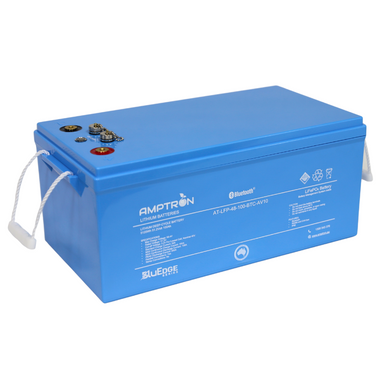
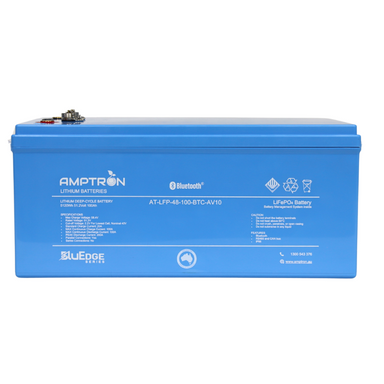
A 48V LiFePO4 battery runs at 51.2V nominal, so a 100Ah pack stores about 5.12kWh. That's a solid building block for an off-grid system, and most of these batteries can be paralleled to grow capacity later. For complete setups, see our off-grid power systems. For smaller systems, we also stock 24V lithium batteries and 36V lithium batteries.
Our Range of 48V Lithium Batteries
We stock 48V lithium batteries from brands trusted across Australia:
- Amptron batteries: the widest range, with a rackmount ESS battery for home solar, BluEdge and golf cart packs from 50Ah to 105Ah, and the steel-cased EGON 105Ah.
- Custom Lithium batteries: Australian-made 48V 100Ah and 200Ah ultra slim batteries for big caravan, 4WD and boat builds, rated at 250A continuous with a 7-year warranty.
- K2 batteries: the Pytes V5 48V backup battery for wall or rack mounting in home solar systems.
- Invicta batteries: a 48V golf cart battery in 30Ah, 55Ah and 105Ah, with Bluetooth and an isolation switch.
Who a 48V Lithium Battery Suits
- Home solar and backup: Store daytime solar for the evening, or keep the essentials running through a blackout.
- Off-grid homes, cabins and sheds: A scalable battery bank that pairs with 48V hybrid and off-grid inverters.
- Golf carts and utility EVs: Sealed, lightweight packs for 48V carts, LSVs and farm buggies.
- High-end caravan and 4WD builds: Large inverters, air con and induction cooking on far less current than 12V.
What to Look for in a 48V Lithium Battery
Fixed install or on the move
Rackmount and wall-mount batteries like the Amptron ESS and K2 Pytes V5 are designed for a dry, fixed space in a house or shed. Batteries for carts, boats and vehicles need a sealed case and vibration resistance, so look for IP65 to IP67 and a tough casing.
Communication with your inverter
Many 48V batteries here offer CAN Bus and RS485, which lets a compatible inverter read the battery's state of charge and manage charging. For a home solar system, check that the battery is on your inverter's compatibility list.
Continuous discharge and expansion
Continuous ratings in this range run from 60A up to 250A. At 48V, even 100A is around 5kW, which covers most home and touring loads. If you think you'll want more storage later, check how many batteries can be run in parallel. Most packs here support parallel connection, but not series.
Why Buy 48V Lithium Batteries from Outback SafeTrack
- Free Shipping: Orders over $299* ship free Australia-wide.
- Price Match Guarantee: Found them cheaper? We'll match it.
- Speedy Delivery: 2-10 business days, or a $100 gift voucher if we're late.
- 30-Day Easy Returns: No restocking fees on eligible returns.
- Expert Support: We'll help you match the battery to your inverter, cart or off-grid build.
Ready to Power Up With a 48V Lithium Battery?
Browse the 48V lithium batteries above, or call 1300 902 361 to talk through your system.
Read less