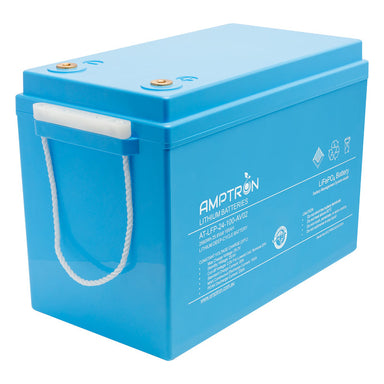
Most camping and touring setups are still 12V, and our lithium batteries for camping cover those. A 24V system tends to suit new builds with a heavy 240V load, or vehicles and vessels that already run 24V. For larger commercial and off-grid systems, we also stock 36V lithium batteries and 48V lithium batteries.
Our Range of 24V Lithium Batteries
We stock 24V lithium batteries from brands trusted on Aussie trucks, vans and boats:
- Custom Lithium batteries: Australian-made 24V packs from a 100Ah compact through to 200Ah, 280Ah and 310Ah, plus 400Ah, 460Ah and 620Ah ultra slim models, with a 7-year warranty.
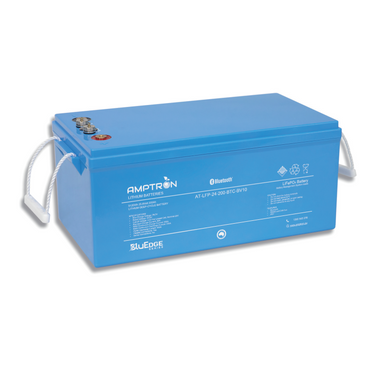
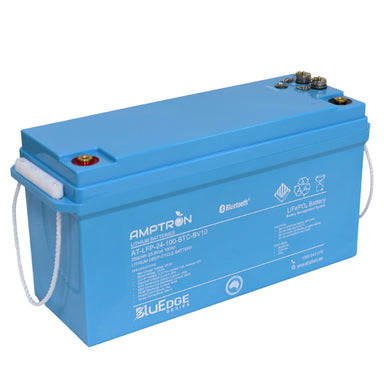
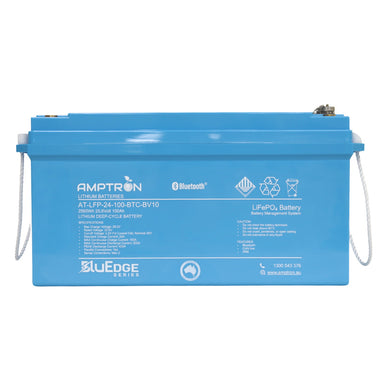
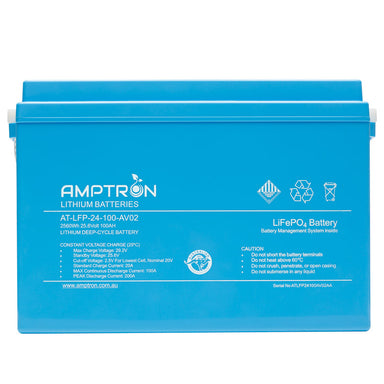
- Amptron batteries: 50Ah and 100Ah packs, plus BluEdge 100Ah and 200Ah models with Bluetooth, CAN Bus and RS485.
- Renogy batteries: the Core 24V 200Ah, IP65 rated with 200A continuous discharge.
- K2 batteries: a steel-cased 24V 230Ah pack holding 5888Wh.
- Enerdrive | Dometic batteries: the B-Tec 24V 100Ah with Bluetooth monitoring.
- Invicta batteries: 24V lithium in 100Ah and 150Ah, with Bluetooth through the Invicta app.
Who a 24V Lithium Battery Suits
- Trucks and buses: Vehicles that already run 24V electrics can charge and power gear without stepping the voltage up or down.
- Boats: Electric motors, winches and larger house loads on 24V systems.
- Big caravan and motorhome builds: Air con, induction cooking and inverters of 3000W and up.
- Off-grid cabins and sheds: More stored energy with less cabling than a large 12V bank.
What to Look for in a 24V Lithium Battery
Capacity in watt-hours
Amp-hours at 24V hold twice the energy they do at 12V. A 24V 100Ah battery stores about 2560Wh, the same as a 12V 200Ah. Compare batteries in watt-hours to see what you're really getting when you switch voltages.
Continuous discharge
Match the battery's continuous rating to your inverter. Ratings across this range run from 70A on the smallest pack to 380A on the Custom Lithium 24V 460Ah. As a guide, a 3000W inverter at 24V draws roughly 125A to 140A at full load, so most of the larger packs here handle it comfortably.
Charging gear and 12V loads
A 24V battery needs a 24V charger and a solar controller that supports 24V. In a 12V vehicle, you'll need a 12V to 24V DC-DC charger. To run 12V appliances like lights or a water pump, add a 24V to 12V converter, or check whether your fridge runs on both voltages, as many compressor fridges do.
New to lithium? Start with our guide to choosing lithium batteries for camping.
Why Buy 24V Lithium Batteries from Outback SafeTrack
- Free Shipping: Orders over $299* ship free Australia-wide.
- Price Match Guarantee: Found them cheaper? We'll match it.
- Speedy Delivery: 2-10 business days, or a $100 gift voucher if we're late.
- 30-Day Easy Returns: No restocking fees on eligible returns.
- Expert Support: We'll help you plan the battery, charging and conversion for a 24V system.
Ready to Step Up to a 24V Lithium Battery?
Browse the 24V lithium batteries above, or call 1300 902 361 if you're weighing up 12V against 24V for a new build.
Read less