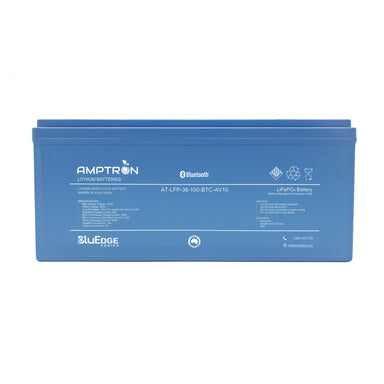
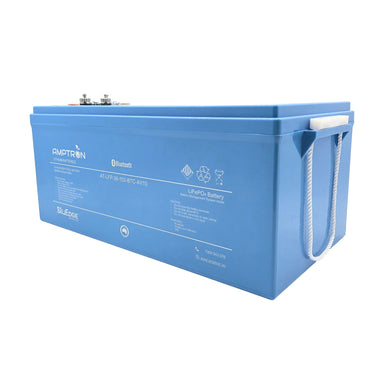
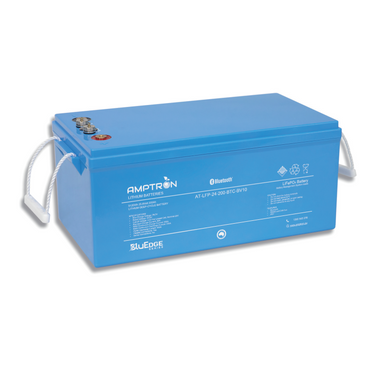
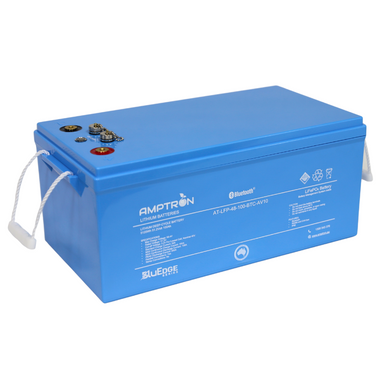
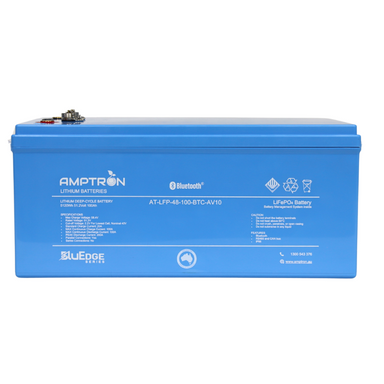
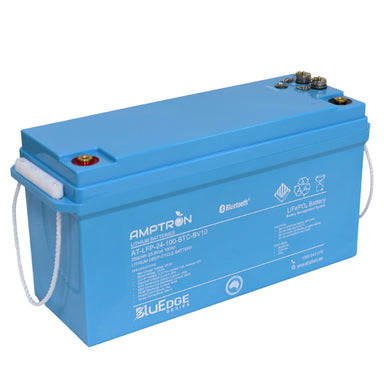
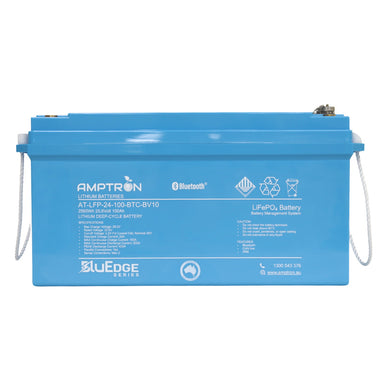
Match the voltage to the motor or house loads first, then pick capacity. A marine lithium battery should suit spray, damp lockers and the knockabout of a boat, not just a weekend in the van. New to 24V and 36V? Start with our guide to lithium battery voltage.
What to Look for in Marine Batteries
Water resistance, not just a camping spec
Marine lithium batteries are chosen for spray, damp lockers and the knockabout of a boat, with water-resistant construction. That is the difference between a battery that lives on the water and a dry-camp battery parked in a hull.
Voltage that matches the equipment
A 12V camping battery is not automatically a marine battery. Electric outboards and trolling motors often want 24V or 36V. House loads can stay lower voltage. Check the motor or panel before you buy, then look at lithium camping batteries only if the job is actually camping.
Monitoring you can reach from the helm
Some marine batteries include Bluetooth, so you can check charge and health from the phone instead of crawling into a locker. See lithium batteries with Bluetooth if that is the main filter.
Marine Lithium Batteries by Voltage
24V marine batteries
Use 24V marine batteries when the boat or system is already 24V, or when you want lower current than a 12V bank for the same work. Match the charger to 24V lithium, not a lead-acid profile.
36V marine lithium batteries
36V is a common voltage for electric outboards and trolling motors. Match the motor voltage first, then choose capacity for how long you want to stay out. A 36V marine battery is not a swap for a 12V house bank.
48V marine batteries
48V marine batteries are for equipment that calls for 48V. Use them when the system is built that way, not as a substitute for a 24V or 36V motor.
Why Buy Marine Batteries from Outback SafeTrack
- Free Shipping: Orders over $299* ship free across Australia.
- Price Match Guarantee: Found marine batteries cheaper? Call us.
- Fast Delivery: Most orders arrive in 2-10 business days, or we'll send a $100 gift voucher.
- 30-Day Returns: No restocking fees on eligible returns.
- Expert Support: Voltage, motor or house loads. Call 1300 902 361.
- Aussie-based service: Gear picked for boats, not just a van fridge.
Find the Right Marine Battery for the Boat
Shop marine batteries, match the voltage to the motor or house loads, then pick capacity. Unsure which voltage the boat needs? We'll help you pick.
Read less