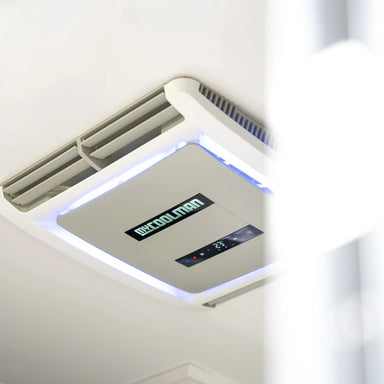
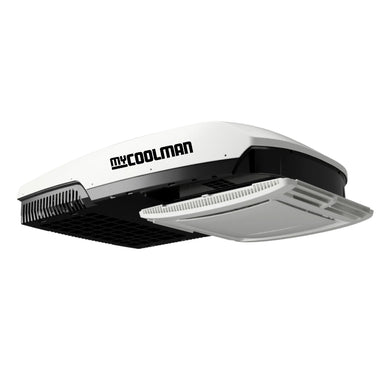
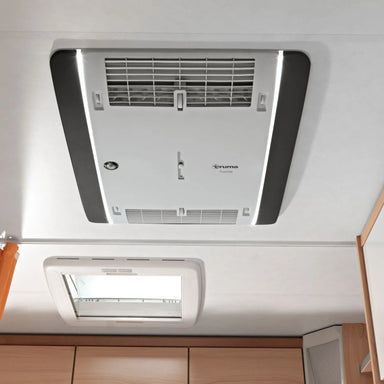
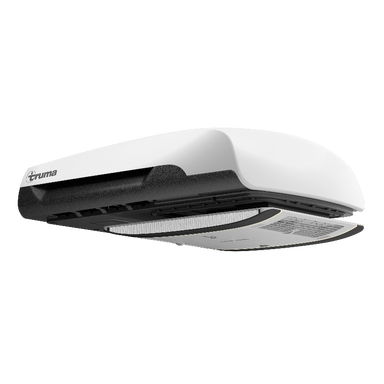
About Our Caravan Air Conditioners
If we’re being honest, Aussie summers in a tin can on wheels can turn your dream trip into a sweat-soaked nightmare. Cracking a window doesn't cut it when you're parked in the middle of nowhere and the mercury's pushing 40. That's where a proper caravan air conditioner makes all the difference.
Our range of caravan aircons is built for brutal Aussie heat, with units that cool fast, run quiet, and don't chew through power, so you can stay off-grid longer without melting into your mattress. Whether you're upgrading an old clunker or fitting out your van for the first time, we've got compact roof-mounted systems that won't leave you sweating.
Stop tossing and turning through sticky nights. Get the cool change you deserve, no matter where your travels take you.
Read More
Why Install a Caravan AC?
- Proper Sleep: An air conditioner for caravan setups means actually sleeping through hot nights instead of lying awake in a puddle of sweat. You'll wake up refreshed, not wrecked.
- Year-Round Travel: Don't limit yourself to cooler months. With caravan air conditioners installed, tour Australia in any season without cooking inside your van.
- Protect Your Investment: Heat damages interiors: warped cupboards, cracked plastics, faded fabrics. Running an aircon for caravan preservation protects your investment long-term.
- Happy Family Time: Kids and partners get cranky in the heat. A cool caravan means happy travellers and a jolly time together.
- Resale Value: Caravan aircons add serious value if you ever sell. Buyers pay premium for vans with quality cooling already installed.
What to Look for in Aircons for Caravans?
- Cooling Capacity (BTU): Match your caravan AC to your van size. Small vans (under 5m) need 8,000-10,000 BTU, while larger vans want 12,000-15,000 BTU.
- Power Draw: Check wattage carefully. Lower consumption means running longer on lithium camping batteries and camping inverters, or smaller generators.
- Roof-Mounted vs Portable: Roof-mounted caravan air conditioners are permanent, efficient, and free up floor space. Portable units like our camping air conditioners work, but take up room.
- Heating Function: The old two birds with one stone. Reverse-cycle AC for caravans provides heating for cold nights, giving proper value for money.
- Low-Profile Design: Aerodynamic units reduce wind resistance and fuel consumption. Plus, they are less likely to cop damage from low branches.
- Quiet Operation: Quality caravan aircon units run quietly inside and out. Nobody wants to annoy fellow campers or lose sleep to their own cooling.
Pair your aircon for caravan with camping solar blankets for off-grid power generation or complete your setup with camping fridges and freezers.
Why Buy Caravan Aircons from Outback SafeTrack?
We’re the go-to for off-grid products across Australia for a reason.
- Free Shipping: Orders over $299* ship free anywhere in Australia.
- Price Match: Found aircons for caravan cheaper elsewhere? We'll match it.
- Fast Delivery: Your caravan air conditioner arrives in 2-10 business days, or snag a $100 gift voucher.
- Easy Returns: 30-day return policy with no restocking fees if you change your mind.
- Expert Support: Complete with a callback after your purchase and a team that’s ready to answer any questions.
- Real Experience: Every recommendation and advice comes from people who’ve actually hit the Aussie outback and roads themselves.
Cool Your Caravan Down & Hit the Road
Ready to beat the heat? Browse our caravan air conditioners and find the perfect cooling solution for your home on wheels. Need help choosing the right capacity or planning your power system? Give us a call – we'll help you stay comfortable wherever you roam.
Frequently Asked Questions
Can I install a caravan air conditioner myself, or do I need a sparky?
Roof-mounted caravan air conditioners need proper electrical work and roof sealing. Unless you're confident with 240V wiring, cutting roof holes, and waterproofing, hire a qualified auto electrician or caravan technician. Dodgy installations cause leaks, electrical faults, and warranty voids. Most installers charge $300-600 for a professional fitting. It's worth paying for peace of mind – water damage from poor sealing costs way more than proper installation.
What size inverter do I need to run my caravan AC?
Your inverter needs to handle both running watts and surge watts. A typical 10,000 BTU caravan aircon draws 1,000-1,200W running but spikes to 2,500-3,000W on startup. You'll need a 2,500W continuous inverter with 5,000W+ surge capacity minimum.
Pure sine wave inverters are essential, as modified sine wave inverters can damage AC compressors. Size up if you're running other gear simultaneously. Undersized inverters shut down from overload when your AC for caravans kicks in.
Can I run my caravan air conditioner while driving?
Running caravan air conditioners while driving depends on your power setup. If connected to 240V shore power, obviously not! Most roof-mounted units need power from a generator or an inverter while mobile. Your alternator charges batteries, which power the inverter, which runs the AC. This setup hammers your electrical system though: alternator, batteries, and inverter all work overtime. Many travellers just use the vehicle's dash AC while driving and save the caravan aircon for when parked.
How much battery capacity do I need for overnight caravan AC cooling?
Overnight cooling with an air conditioner for your caravan needs serious battery grunt. A 1,000W unit running 8 hours draws roughly 650-700Ah from 12V batteries (accounting for inverter losses). Most people run their caravan AC for 2-3 hours before bed to cool down, then switch off overnight. For that, a 200-300Ah lithium battery capacity works.
Want all-night cooling? Budget for 600-800Ah minimum or run a generator. Solar charging during the day helps top up.
Will my caravan aircon work on both 240V and 12V power?
Most roof-mounted caravan air conditioners only run on 240V AC power. They need either shore power, a generator, or an inverter (converting 12V DC to 240V AC). There's no direct 12V operation since the compressor motors require 240V. When you're plugged into powered sites, your AC for the caravan runs directly off mains.
Off-grid? You need an inverter and batteries or a generator. Some portable units offer 12V, but roof-mounted systems are 240V only.
Can I run my caravan AC and other appliances simultaneously?
Running multiple appliances with your caravan AC depends on your total power capacity. Shore power (usually 10-15A) handles aircon plus small loads like lights and phone charging. Inverter setups need careful management: a 2,000W inverter running 1,200W AC leaves only 800W for other gear. A microwave, kettle, or hairdryer will overload it.
Most campers prioritise aircon or high-draw appliances, not both simultaneously. Size your system for your heaviest realistic combined load.
Read Less